How to Train an AI on Your Company’s Knowledge Base
You are not training a model — you are building the library it reads from. This is the practical method: what to write, how to structure it, what breaks retrieval, and how to keep it current.
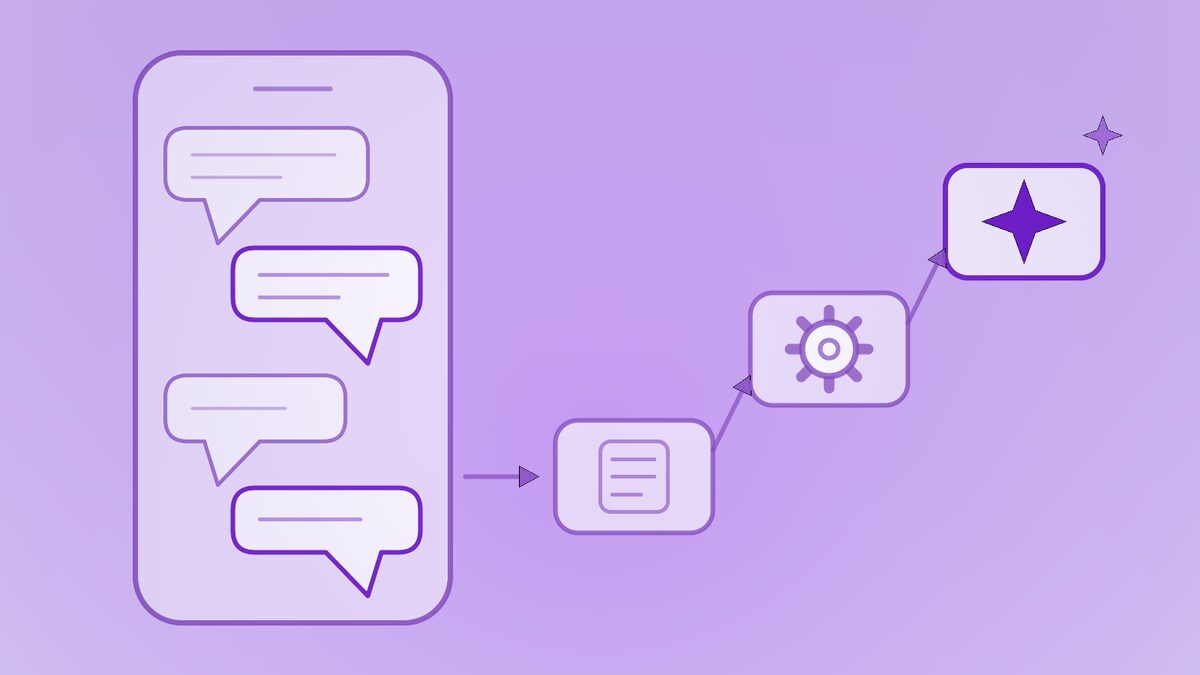
The phrase “train the AI on our data” is misleading, and the misunderstanding causes most bad deployments. You are not adjusting a model’s weights. You are building a knowledge base that the assistant searches at the moment a customer asks something.
What belongs in the knowledge base
Products live in the catalogue. The knowledge base is everything else your team explains repeatedly. Start with these documents — they cover the large majority of non-product questions for almost every business.
- Delivery. Methods, costs, timeframes by region, what happens if something is delayed.
- Returns and exchanges. Window, condition requirements, who pays shipping, exact process.
- Warranty and after-sales. What is covered, for how long, how a claim is made.
- Ordering. How to place one, minimum order, order changes and cancellation.
- About the business. Hours, locations, contact routes, languages, what you specialise in.
The catalogue is half the knowledge base
Write descriptions that include the things customers care about: what it is for, who it suits, materials, care, what it pairs with, why someone would choose it over the alternative. Two extra sentences per product changes recommendation quality more than any other single change.
How to structure the documents
The AI consultant does not read a document from start to finish. The system splits it into fragments along paragraph breaks and, when a question comes in, pulls the few fragments closest to it in meaning. That is why structure matters more than volume.
- One topic, one document. Keep “Delivery” separate from “Returns”, so a fragment never carries unrelated text.
- Paragraphs that make sense on their own. Not “in this case the window is 14 days” but “Returns are accepted within 14 days of delivery”. A fragment can end up in an answer without its neighbours.
- A blank line between topics. That is exactly where the system cuts the text.
- Your customers’ words, not yours. If customers ask “how long does the parcel take” and the document only says “logistics lead times”, the search may miss it.
- Text, not a scan. No text can be pulled from a scanned PDF — upload a TXT file or a PDF with a real text layer.
Mistakes that quietly ruin retrieval
- Contradicting yourself across documents. Two documents with different return windows produce an unpredictable answer. Deduplicate before uploading.
- Documenting the ideal process instead of the real one. If your actual dispatch time is 5 days and the document says 2, you have automated a complaint generator.
- Pointing elsewhere instead of answering. Write “terms are on our website” and that is exactly what the AI consultant will tell the customer. Put the terms themselves into the knowledge base.
- One document for everything. Forty pages about everything at once produce fragments that mix unrelated topics, and the answers turn vague.
Frequently asked questions
Do I need to retrain anything when I update a document?
No. The document is re-indexed and the change is live for the next message. There is no training run and no waiting period.
How much content do I need to start?
A handful of short documents covering delivery, returns, warranty, ordering and business details — plus your catalogue. That is enough to launch.
What if two documents disagree?
The assistant may retrieve either one, so the answer becomes unpredictable. Resolve contradictions in your source material — this is the single most common cause of inconsistent answers.
20 minutes a week
A knowledge base ages along with the business. A simple routine is enough for most:
- Read 10–15 conversations from the week, especially the ones handed over to a manager. Wherever an answer was off, add to the document.
- Update what changed: prices, delivery times, opening hours, promotions. The change applies from the very next message.
- Remove what is out of date. A document about last month’s promotion does more harm than no document at all.
The takeaway
Training an AI on your knowledge base is not a machine-learning task. It is a writing task, and the skill it needs is the ability to state what your business actually does, plainly.
Businesses that do this well end up with something valuable beyond the assistant: documentation their own team uses. Continue with how MARREK uses this, or look at what is included.